Organize your architecture
Structure your architecture into organizations, projects, and subprojects to keep systems and diagrams organized and easy to navigate. Uxxu lets you organize diagrams into projects and subprojects, making it easier to manage large and complex architectures. Teams can maintain a shared object model between parent and child projects to keep architecture elements consistent, while still allowing projects to evolve independently. At the same time, object models can be separated between projects when needed, helping teams maintain clear boundaries between systems, domains, or products.
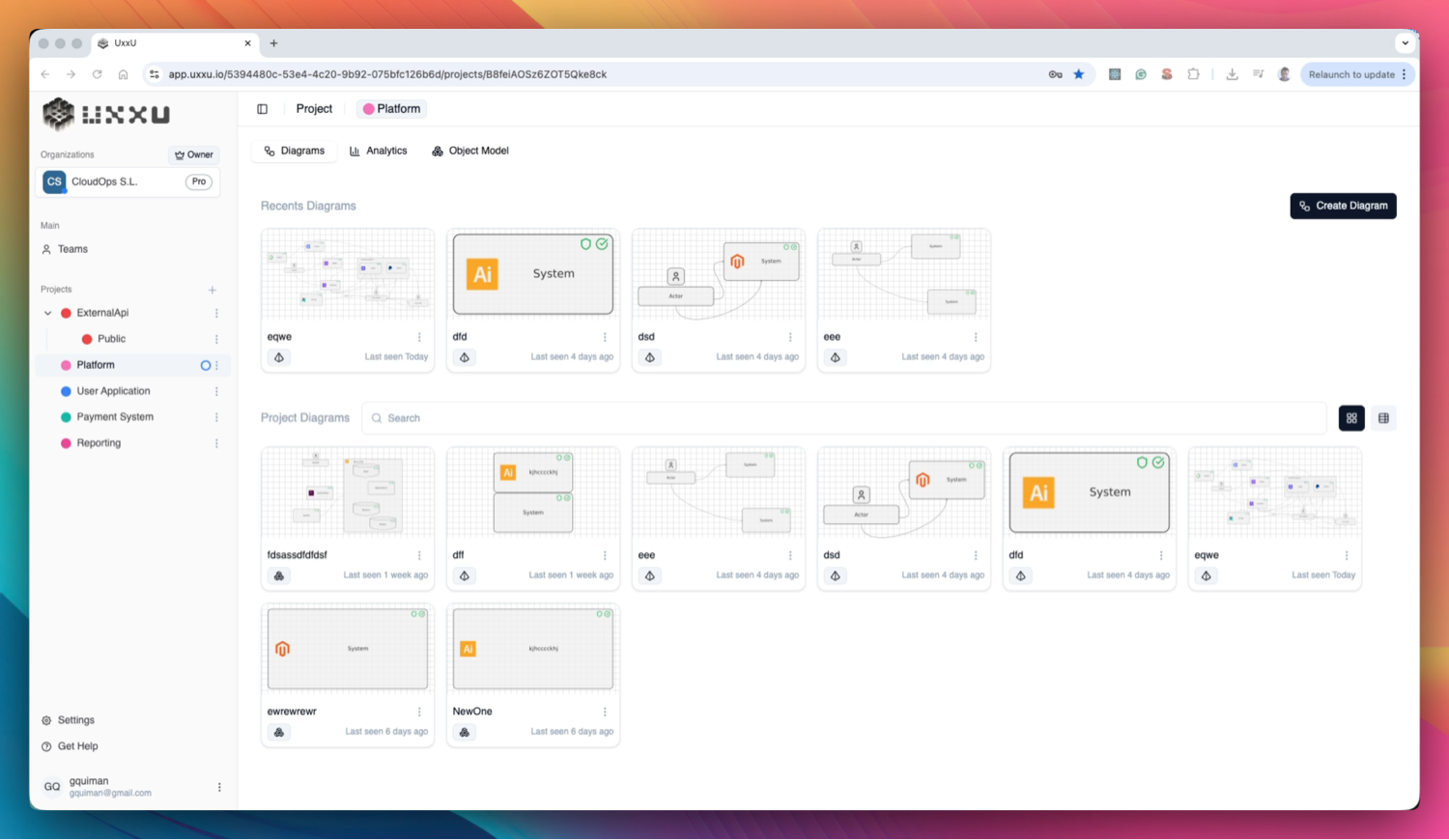
Key Objectives
- Structure architecture into clear organizations, projects, and subprojects.
- Maintain consistency of architecture elements across related projects.
- Enable teams to manage large architectures without losing clarity.
- Separate architecture domains while preserving shared models when needed.
Organization Structure
- Architecture can be organized into organizations, projects, and subprojects.
- Organizations represent teams or companies managing their architecture.
- Projects group related systems and diagrams within a domain or product.
- Subprojects allow teams to break down large architectures into smaller, manageable sections.
Shared Architecture Model
- Parent and child projects can share architecture elements such as systems, actors, applications, containers, and stores.
- This allows teams to maintain consistency across related diagrams while still enabling each project to evolve independently.
- Changes to shared elements can propagate through the architecture model where appropriate.
Project Boundaries
Separate Object Models
Projects can maintain independent object models when systems belong to different domains, products, or teams. This helps keep boundaries clear and prevents architecture models from becoming overly coupled.Diagram Organization
Diagrams can be grouped within projects and subprojects, making it easier to navigate large architectures and find relevant views quickly.Scalable Architecture Management
As systems grow, projects and subprojects help maintain a clear structure so teams can manage hundreds of diagrams and architecture elements without losing visibility.Team Ownership
Different teams can manage their own projects while still contributing to a shared organizational architecture model.